

Do you, or perhaps a “friend”, spend hours researching the perfect restaurant, reading every review twice, only to pick the place with the best photos? You, I mean they, are not thinking better, just thinking harder.
We’ve been sold this idea that good decisions require more analysis, more data, more mental effort. But your brain isn’t wired for the decisions modern life demands. It’s running optimized for a world that no longer exists.
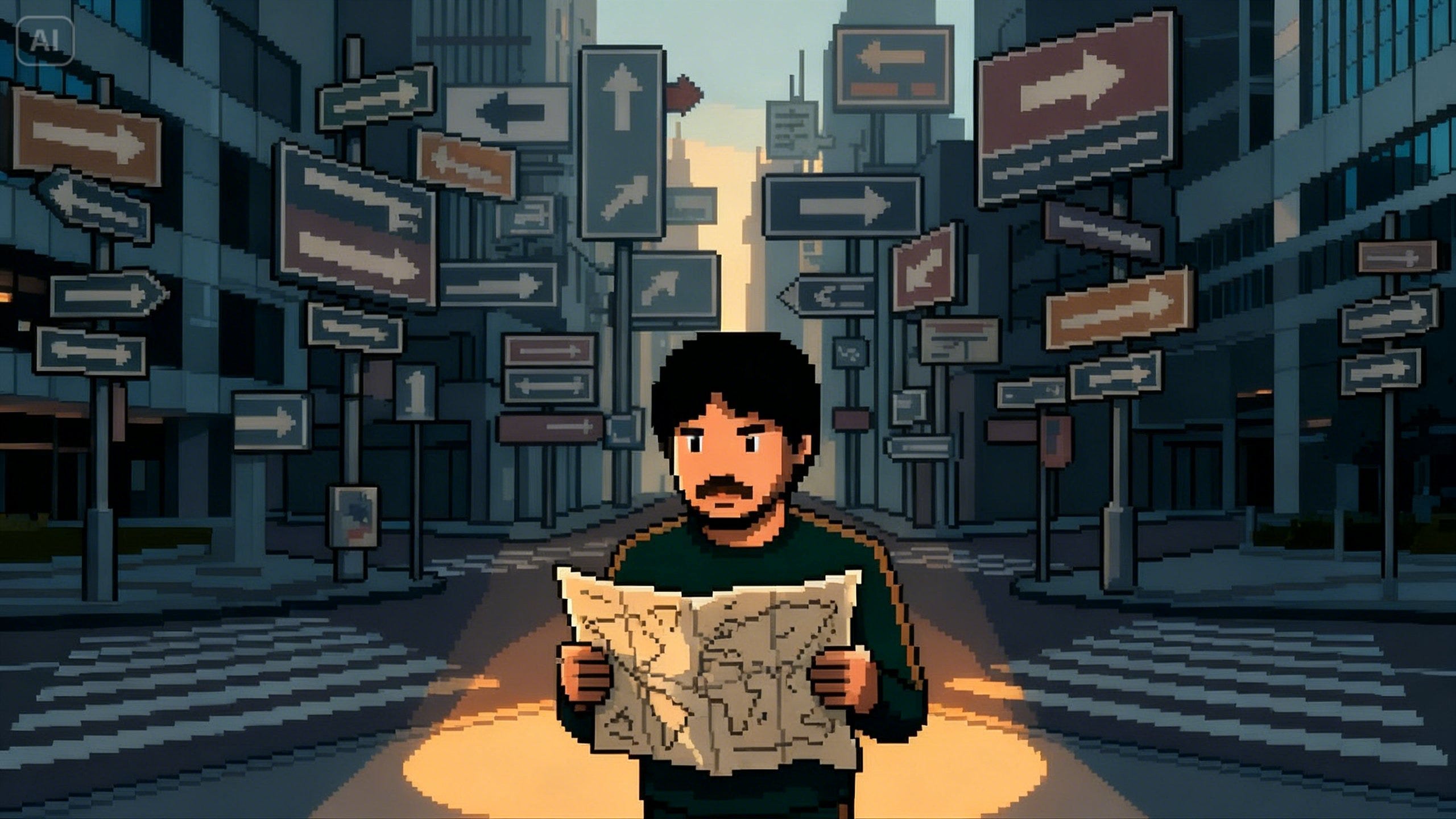
You Aren’t Being Hunted By Tigers Anymore
Start with something simple: why you agreed to that meeting you didn’t want to attend. Your brain desperately wants you to fit in. For most of human history, being cast out meant death. Today, this same wiring makes you nod along when you disagree, buy things because others have them, and mistake popularity for quality.
Solomon Asch’s conformity experiments revealed just how powerful this pressure is. When participants were asked to judge line lengths with an obvious right answer, about 37% conformed to the group’s incorrect response at least once. They knew the answer was wrong, but the desire to fit in overwhelmed their own perception.
The fix isn’t to become a contrarian. Just ask yourself: “Would I make this decision if no one would ever know?”
Notice how you remember last week’s events. That one rude email overshadowed twenty positive interactions. The weird coincidence got all the credit for your success. Your brain latches onto whatever’s loudest or strangest and gives it too much weight. You’re not seeing clearly; you’re seeing selectively.
The antidote is boring but effective: list all factors before deciding which matter. You don’t do this automatically.
Stories Over Reality
Give someone safety statistics, their eyes glaze over. Tell them about one accident, they’re suddenly passionate about reform. Your brain craves narrative so much it invents connections between random events. This is why you think you’re “due” for good luck after a bad streak.
Nassim Taleb calls this the narrative fallacy: our inability to look at facts without weaving an explanation into them. Daniel Kahneman’s research shows we operate under a “what you see is all there is” rule, creating coherent stories from limited information. The less you know, the easier it is to construct a compelling narrative.
When deciding, strip away the story. Look at what happened, not the narrative your brain wants to construct.
Even your memories aren’t safe. Your brain constantly rewrites them to match current beliefs. You think you “always knew” that stock would rocket up. You didn’t. This false confidence makes you overconfident about future decisions.
Elizabeth Loftus’s groundbreaking research proved memories are reconstructive, not reproductive. In her experiments, simply changing one word in a question (asking how fast cars were going when they “smashed” versus “hit”) altered both speed estimates and whether people “remembered” seeing broken glass that wasn’t there.
Start writing down your predictions and reasoning. Reality is more surprising than your edited memories suggest.
The Simplicity Trap
Watch how you explain problems. Poor performance? Must be the new manager. Relationship troubles? That one fight. Your brain loves single causes for complex problems. But reality is messier. Multiple factors interact in ways that resist neat explanations. Map the web of contributing factors instead of finding THE cause.
Notice how ownership warps your judgment. The moment something becomes “yours,” its value inflates. Your coffee mug, your ideas, your methods all seem special simply because they’re yours. This keeps you stuck with suboptimal decisions because letting go feels like loss.
The endowment effect, documented by Kahneman and colleagues, shows people demand about twice as much to give up a mug they own compared to what they’d pay to acquire the same mug. This is ownership bias.
Try this: before committing, imagine advising a friend in your exact situation. The clarity is immediate.
What Clear Thinking Looks Like
Recognizing when your brain takes shortcuts that made sense 10,000 years ago but sabotage you today:
Question why certain information feels important
Notice when you’re constructing stories instead of examining facts
Accept that your memories are unreliable narrators
Clear thinking might seem like doing less of what feels like thinking (ruminating, analyzing, story-building) and more of what feels like nothing (pausing, questioning assumptions, accepting uncertainty).
Your brain will resist. It wants to fit in, find patterns, create stories, feel certain. These impulses kept your ancestors alive. However, in a world of complex decisions and infinite information, they’re bugs, not features.
Think clearer, not harder.
❤️ the Kahneman references! Please also check out his “remembering self” vs “experiencing self” ideas